Workflow automation across every tool you already run
Multi-step work shouldn't stall in someone's inbox. We build automated workflows that move data, make decisions, and chase their own approvals across your whole stack.
How it works
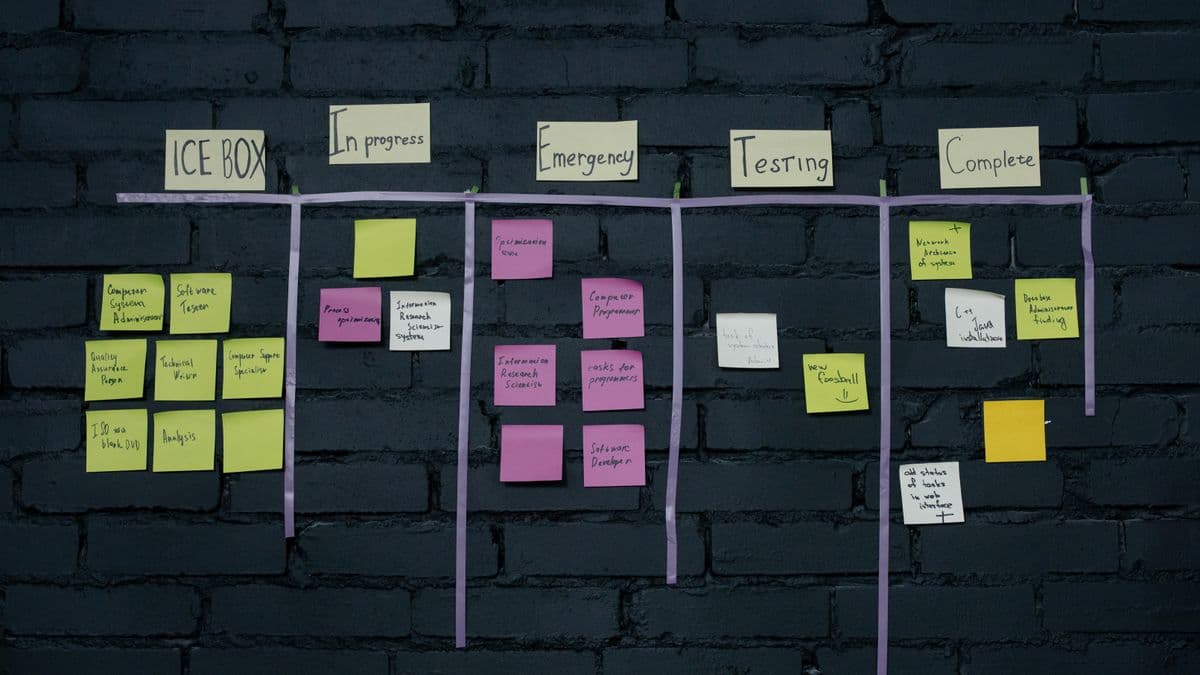
A workflow rarely fails because a step is hard. It fails in the gaps — the record that sits unassigned overnight, the approval waiting on someone who's on annual leave, the form that gets retyped into a second system by hand. Workflow automation closes those gaps by making the process itself the software: it knows what's next, who owns it, what the SLA is, and what to do when nobody responds.
Visual orchestration with real logic underneath
Branching, parallel paths, waits, retries, and escalations — modelled properly, not stitched together from a hundred one-step triggers.
- Conditional branching and parallel steps that reflect how the work actually splits
- Time-based SLAs with automatic nudges, reassignment, and escalation when a step goes cold
- Human-in-the-loop approvals via Slack, Teams, email, or a branded portal
- Full run history: every workflow instance replayable, so you can see where time actually goes
AI for the steps rules can't cover
Rules handle the predictable path; models handle the messy input that used to require a person to read it.
- Classify, summarise, and extract from emails, tickets, contracts, and call transcripts
- Draft replies, quotes, and case notes for a human to approve rather than write from scratch
- Confidence thresholds that route low-certainty cases to a person instead of guessing
- Model choice per step, so you're not paying frontier prices for a simple classification
Integrations that hold up under volume
Native connectors to your core systems, with proper error handling instead of a failed-run email.
- Salesforce, HubSpot, NetSuite, SAP, Dynamics, Workday, Snowflake, Twilio, and custom APIs
- Idempotent writes and dead-letter queues so a retry never creates a duplicate record
- Rate-limit aware batching that survives month-end spikes without throttling
- Runs in your cloud or ours, with SSO, role-based access, and encrypted secrets management
Where teams use it
Built for real revenue work.
Lead capture to first meeting
Inbound enquiries get enriched, scored, routed to the right rep, and followed up automatically until someone replies. Teams typically see first-touch time drop from hours to under five minutes.
Employee onboarding across systems
One approved offer triggers accounts, hardware requests, payroll setup, policy acknowledgements, and a manager checklist — with everything provisioned before day one instead of during week one.
Quote, approval, and contract turnaround
Pricing exceptions route to the right approver by threshold, documents generate and send for signature, and the CRM updates itself. Deal desk cycle times commonly fall by half.
“Our old setup was 200 Zaps nobody fully understood and a monthly task bill that scaled with our growth. One workflow engine replaced all of it, and now we can actually see where a deal is stuck.”
FAQ
Questions, answered.
How do I automate my business with AI?
Start with one process where the volume is high, the rules are stable, and someone can tell you what it costs today. Map it end to end, automate the deterministic steps first, then add AI only where a human is currently reading, judging, or writing something. That sequencing matters: teams that lead with AI on an undocumented process usually automate their own confusion, and it's why we insist on a measured baseline before we build.
How is this different from Zapier or Make.com?
Those tools are excellent for lightweight, linear automations and we'll happily tell you when they're the right answer. They get expensive and brittle once you need branching logic, approval chains, long-running processes, audit trails, or tens of thousands of runs a month. We build a workflow engine you own outright, so there's no per-task pricing and no ceiling on complexity.
What is AI workflow automation, specifically?
It's a workflow where at least one step uses a model to interpret unstructured input or generate output — reading an email to determine intent, extracting terms from a contract, or drafting a response. The surrounding orchestration stays deterministic, which is what keeps it reliable. In practice, most of our workflows are 80% rules and 20% AI, applied exactly where the rules ran out.
How long until a workflow is live, and who maintains it?
A first production workflow typically takes four to six weeks including integration and testing; larger programmes run to twelve. You get a dedicated team through build and handover, source code, and documentation written for your admins. Most clients maintain and extend their workflows in-house within a quarter, with us on call for the bigger changes.
Keep exploring
More from the Leadify platform.
Custom AI Software
How we scope, build, and hand over production AI systems that stay yours.
Business Process Automation
For when the target isn't one workflow but an entire operating process across departments.
Marketing automation guide
A practical guide to the CRM workflows that keep running without anyone maintaining them.
Show us where the work gets stuck
Walk us through one process end to end and we'll return a workflow design, the hours it gives back, and a fixed price to build it.